Work Christmas party games that don't feel forced
How to plan office party games that are opt-in, inclusive and genuinely fun, wherever your team is sitting.
By Vieira and Co. 5 minute read. November 2026.
Written with AI assistance and fact-checked by Vieira and Co. How we make our content
Most people don’t dread the work Christmas party because of the food. They dread the moment someone hands them a microphone or a pair of reindeer antlers. Good office party games feel like an invitation, not an assignment. Here’s how to plan them so the quiet accountant and the loud sales lead both have a good time.
Why office party games feel awkward
When a holiday party game goes wrong at work, it’s usually for one of these reasons:
- It puts people on the spot. Performing alone in front of the boss is nobody’s idea of a break.
- It gets too personal. Questions about relationships, money, bodies or family can land badly with colleagues.
- It’s mandatory. Being told to have fun is the fastest way to stop having it.
- It leaves people out. Remote staff staring at a muted screen, or coworkers who don’t celebrate Christmas being asked about their favorite Christmas memory.
- It runs too long. A 45-minute game during a two-hour party eats the time people wanted for talking.
The fix is a few simple rules.
Five rules for games people enjoy
- Make it opt-in. Announce the games, start them, and make it clear that watching is fine. People join once they see it’s safe.
- Play in teams. Teams spread the attention around, so nobody is the only one in the spotlight.
- Keep it about work and winter, not private life. “Who has the messiest desk?” is safe. “Who’s had the worst breakup?” is not.
- Use “holiday” language where you can. A “holiday party” with snow, cookies and gift swaps includes everyone, whether they celebrate Christmas, another holiday or nothing at all.
- Keep rounds short. Ten to fifteen minutes per game, with a clear end.
Poll the team first.
A short anonymous poll (“games: yes, no, or only if I can watch?”) tells you more than any guide. It also gives quieter people a voice before the day.
Games for the office
Coworker bingo. Each card has squares like “has worked here more than five years,” “has a pet with a human name” or “has never used the office printer.” People mingle to find a coworker for each square. It’s the easiest icebreaker there is, and it works well when teams that never talk end up in the same room.
Desk decorating contest. Give teams 15 minutes and a small bag of supplies (paper, tape, ribbon, whatever’s in the supply closet). A neutral judge picks the winner. Nobody has to perform, and the office looks festive for the rest of the week.
Guess the baby photo. Collect childhood photos from volunteers in advance, number them, and pin them on a board. People write their guesses on a sheet. Only include people who sent a photo themselves.
Office trivia. Write questions about the company and the year: When did we move into this building? Which team ordered the most coffee? Keep it light and avoid anything that could embarrass a single person.
Two truths and a lie, team edition. Each team submits three facts about the team as a whole. Other teams guess the lie. It’s safer than doing it one person at a time.
Games for a restaurant or bar
Restaurant parties have less space and more noise, so pick games that work while seated:
- Table trivia. Print a sheet of questions per table and collect answers before dessert. Announce the winning table at the end.
- Undercover tasks. Hand each person a folded card with a harmless task: find out who has the longest commute, get someone to recommend a book, learn a teammate’s favorite holiday snack. The tasks keep people mixing all evening without stopping the meal.
- Most likely to. Read prompts like “most likely to reply-all by accident” and each table agrees on a name and writes it down, then reveal the answers together. Keep prompts about work habits, never personal ones.
- Caption contest. Pass around a photo (an office plant wearing tinsel, a snowman at a desk) and let each table write the best caption.
Games for a video call
For remote teams or hybrid parties, plan the call as carefully as the room:
- Background contest. Everyone sets a festive or funny virtual background. Vote with emoji reactions.
- Show and tell scavenger hunt. Call out an item (something red, a mug with a story, the oldest thing on your desk) and the first person to bring it on camera wins the round.
- Screen-share trivia. Share slides with questions and let people answer in the chat. Chat answers include the people who don’t like speaking up.
- Breakout rooms. Split larger groups into rooms of four or five for ten minutes with a list of easy questions, then bring everyone back.
If part of the team is in the office and part is remote, run everything through the call so both groups play the same game. Put a laptop at the front of the room and assign one person to watch the chat.
- In the officeMingling games, contests and team trivia. Lots of room to move.
- At a restaurantSeated games on paper that work around the meal.
- On a video callShort rounds, chat answers and visual games anyone can join.
- HybridOne game, run through the call, so nobody plays a second-class version.
Gift exchange tips and budget etiquette
A gift exchange can be the best part of the party or the most stressful. A few ground rules help:
- Set a clear budget and stick to it. Pick a round number that everyone on the team can comfortably afford, and say it out loud. A low limit tends to make gifts more creative, not less.
- Keep it optional. Some people can’t afford it, some don’t celebrate, and some just don’t want to. Let them skip without explaining why.
- Don’t let gifts flow upward. Employees shouldn’t feel pressure to buy for a manager. If managers want to give something, it’s usually kinder to give to the whole team.
- Use a short questionnaire. A few questions (favorite snack, coffee or tea, hobbies, things to avoid) make it much easier to buy for someone you don’t know well. Our Secret Santa kit includes questionnaires, name draw slips and tags for exactly this.
- Steer clear of gag gifts that could offend. Anything about weight, age, looks or alcohol can go wrong. Keep jokes about work life, like a mug for the team’s most dedicated spreadsheet fan.
- Plan for remote people. Set the draw early so there’s time to ship, or agree on gift cards or digital gifts for anyone who can’t be there.
White elephant or secret gift?
A white elephant swap (everyone brings one wrapped gift, and players can steal from each other) is lively and needs no matching up. A secret gift exchange, where each person draws one name, feels more personal but takes more organizing. For larger teams or people who barely know each other, the swap is usually easier.
Putting it together
A good plan for a two-hour party looks like this: one mingling game in the first half hour, one team game in the middle, and the gift exchange or awards at the end. Leave plenty of time for people to just talk. That’s what most of them came for.
If you want everything ready to print, our Out of Office pack has 14 office Christmas party games, including Coworker Bingo.
Printables for this
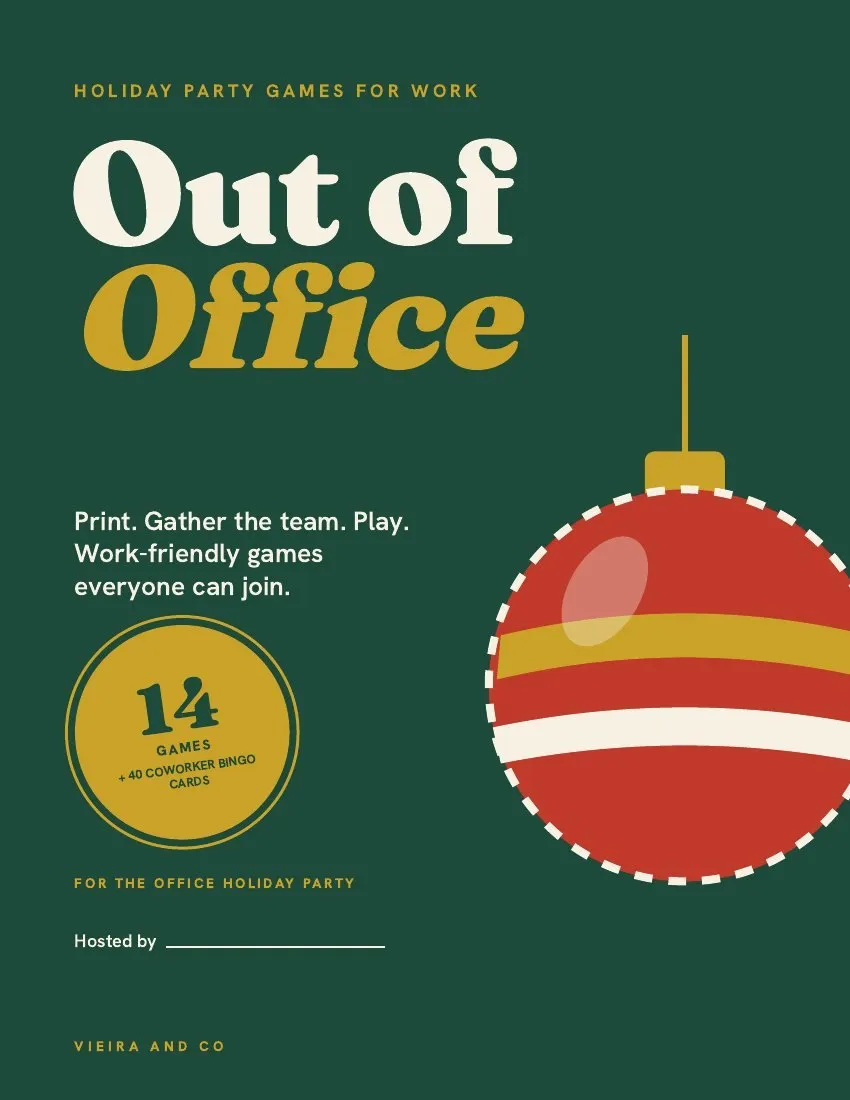
Out of Office holiday party games
14 office Christmas party games with Coworker Bingo.
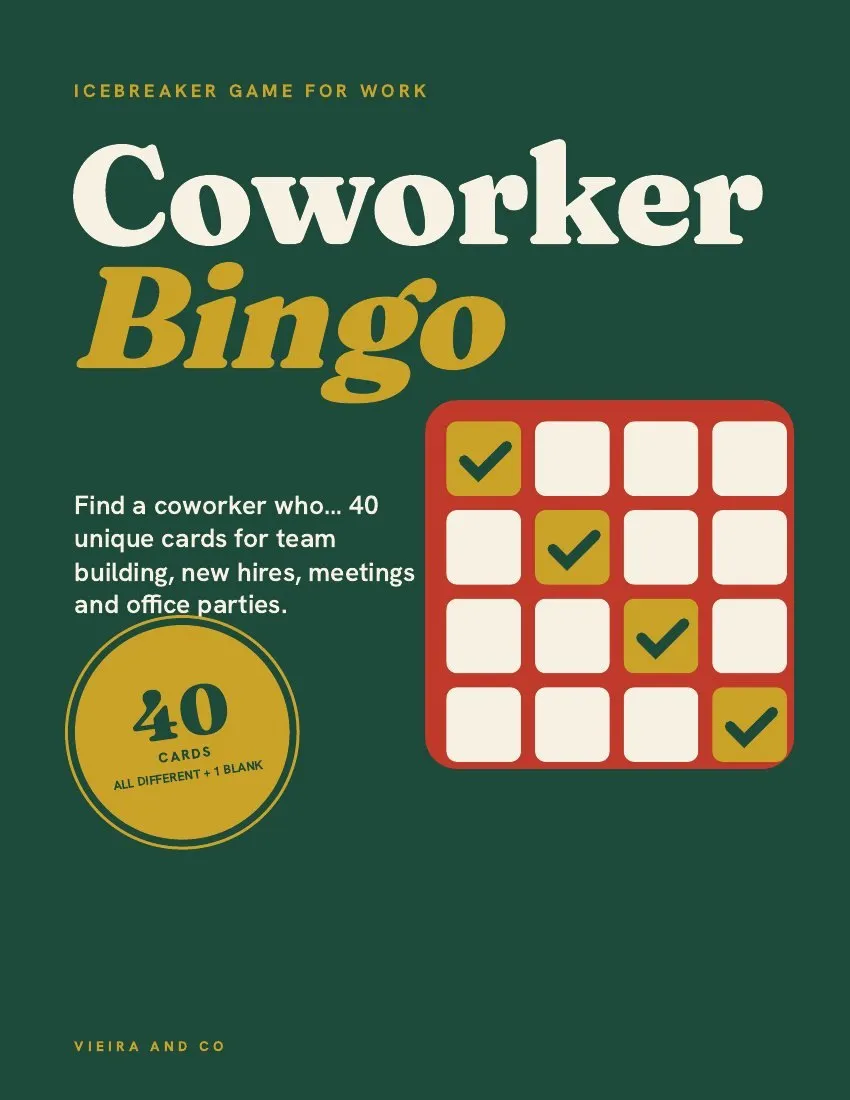
Coworker bingo
40 icebreaker bingo cards for team building and new hires.
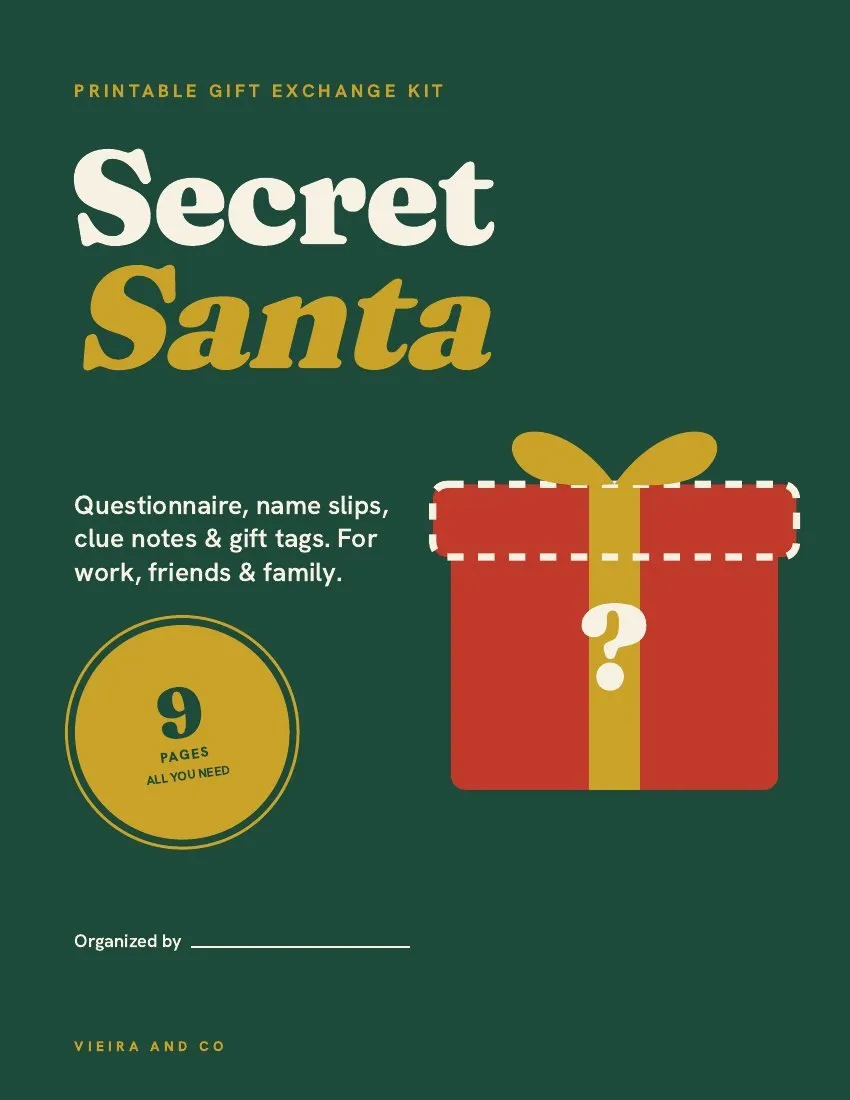
Secret Santa kit
Questionnaires, name draw slips and tags for work or family.