Team building activities coworkers won't roll their eyes at
Short, optional and a little bit fun: how to pick and run team building that people are glad they joined.
By Vieira and Co. 5 minute read. November 2026.
Written with AI assistance and fact-checked by Vieira and Co. How we make our content
Most people don’t hate team building. They hate being made to do something awkward, long and pointless in front of their boss. Get the format right and the same group that groaned last time will ask when the next one is.
What makes team building work
Good team building activities share four things.
- ShortFive to fifteen minutes is often enough. Leave people wanting more, not checking the clock.
- OptionalLet people pass or watch. Pressure kills the fun faster than anything.
- Low embarrassmentNo singing, no acting, no personal confessions. Everyone should feel safe joining in.
- Clear purposeSay why you are doing it: to meet new people, to reset a long meeting, to celebrate a win.
Activities by time
5 minutes: quick starters
Perfect at the top of a meeting or after a long agenda item.
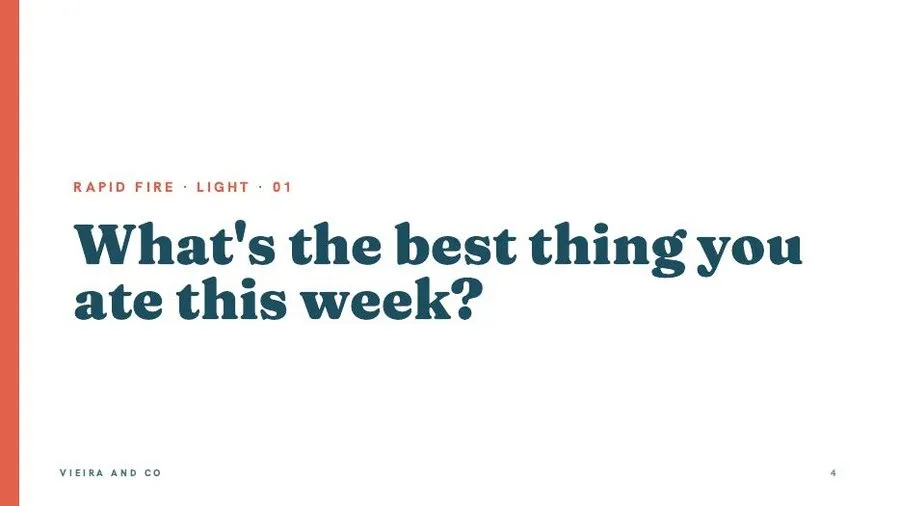
- Rapid-fire question. One light question, everyone answers in a sentence. “What’s the best thing you ate this week?” or “What’s one small thing that made you smile lately?”
- Rose and thorn. One good thing and one tricky thing from your week. Keep it work-light.
- Two-word check-in. Everyone describes their week in two words.
- Show one thing. Hold up one object within reach and explain it in a sentence.
- This or that. Coffee or tea, beach or mountains, early bird or night owl. Quick, harmless and surprisingly revealing.
15 minutes: short games
Enough time for a real game without derailing the day.
- Two truths and a lie. Each person shares three statements, the team guesses the lie.
- Coworker bingo. Cards with squares like “has lived in another country” or “plays an instrument.” People find someone who matches each square.
- Common ground. Small groups have five minutes to find three unusual things they all share. Not “we all work here.”
- Desert island picks. Each person names three items they’d take, then the group builds the ideal survival team.
- Quick trivia. Five to ten questions about general knowledge, or about the company and the team.
45 minutes: a bigger session
Good for an offsite, a quarterly meeting or a holiday gathering.
- Team challenge. Small mixed groups solve a set of puzzles or riddles against the clock.
- Build something. Each team gets the same materials (paper, tape, string) and a goal: the tallest tower, a bridge that holds a cup.
- Team trivia tournament. Several rounds, mixed teams, a light prize.
- Skill swap. Three or four people each teach a 5-minute mini-lesson on something they know: a recipe, a spreadsheet shortcut, how to fold a paper crane.
- Appreciation round. Close with each person sharing one thing they value about someone else on the team.
Activities by format
In person
You have the most options here. Use movement, sticky notes, whiteboards and mixed seating. Break up existing cliques by pairing people from different teams.
Hybrid
Hybrid is the hardest format, because the people in the room tend to dominate.
- Have everyone join the video call from their own laptop, even those in the office, so all faces are equal size.
- Pick activities that run through chat, a shared document or slides.
- Name a remote co-host who watches the chat and brings remote voices in.
Video call
- Keep groups small. Breakout rooms of three to five people work better than one big call.
- Use screen share. Questions or game slides on screen keep everyone focused.
- Lean on chat. “Everyone type your answer, hit enter at the same time” gets quieter people involved.
- Cameras optional. Not everyone wants to be on camera, and that’s fine.
If you’d rather not build slides from scratch, our Better Together team games include activities for the office or video calls with screen slides ready to share.
Ask before you plan.
A two-question poll (“What time works?” and “What sounds fun?”) tells you more than any list of ideas, and people show up for what they helped choose.
Team building activities for new hires
A new hire’s first weeks shape how they feel about the whole team. Make it easy for them to connect.
- A favorites form. New hires share their go-to coffee order, favorite snacks and hobbies. The team learns about them before day one.
- Meet the team bingo. Squares like “has the longest commute” or “has a pet with a funny name” give them a reason to talk to everyone.
- A buddy. Pair them with a peer (not their manager) for the first month.
- Rotating coffee chats. Short one-to-one calls with a different teammate each day of the first week.
- Team introductions, where everyone shares one useful tip and one fun fact.
Keep new hire activities low-key. They’re already meeting lots of people.
How a manager should run and close them
How you lead an activity matters as much as which one you pick.
Before:
- Tell people what’s coming and how long it will take.
- Put it on the calendar. Don’t spring it on people.
- Make sure it fits within work hours.
During:
- Go first, and keep your answer short and a little self-deprecating. It sets the tone.
- Let people pass without comment.
- Keep an eye on time and watch for anyone who looks uncomfortable.
- Don’t let one person dominate.
Closing:
- End on time, or a little early.
- Wrap up with one sentence about what you hope the team takes away, or simply thank everyone.
- Don’t force a debrief. If something useful came up, follow up later.
- Ask for quick feedback now and then so you can keep improving.
What to avoid
- Forced fun. Mandatory events outside work hours, especially without pay.
- Too much personal sharing. Avoid questions about family, health, relationships, money or past trauma.
- Physical challenges that leave out anyone with a disability, injury or different fitness level.
- Activities built around alcohol. Offer good alternatives for everyone.
- Competition that gets personal. Rivalry should stay light and playful.
- Ignoring time zones for remote teams.
- Using it to fix real problems. Team building doesn’t replace fixing workload, pay or conflict. If something is broken, address it directly.
Start small. One five-minute activity at the top of your next meeting is a good first step, and the team will tell you what to try next.
Printables for this
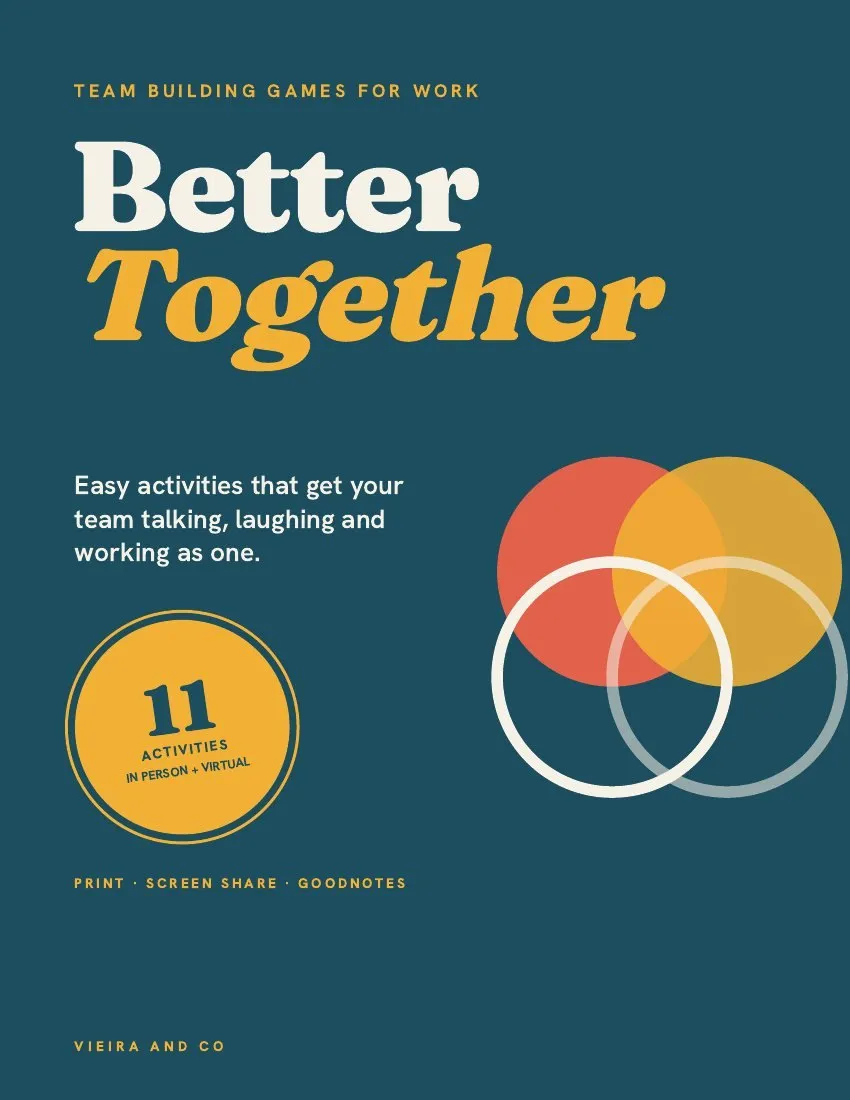
Better Together team games
Team building activities for the office or video calls, with screen slides.
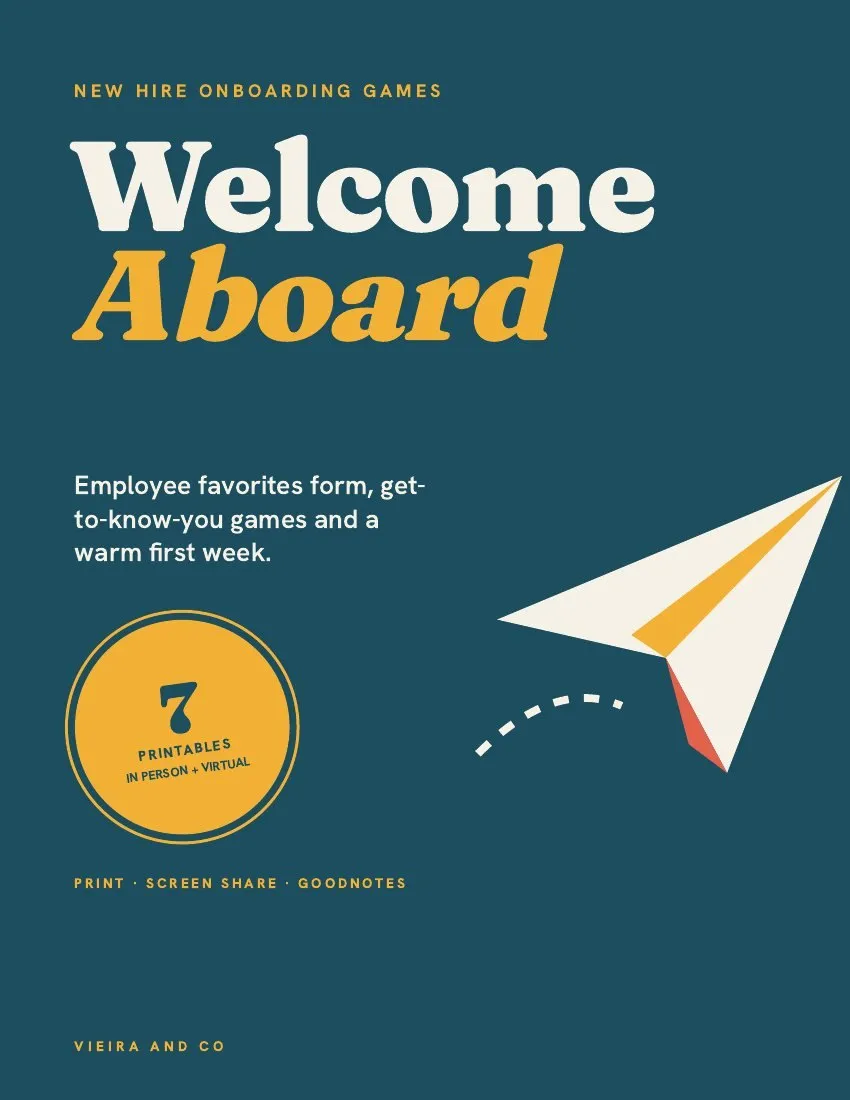
Welcome Aboard onboarding kit
Employee favorites form, new hire games and Meet the Team bingo.
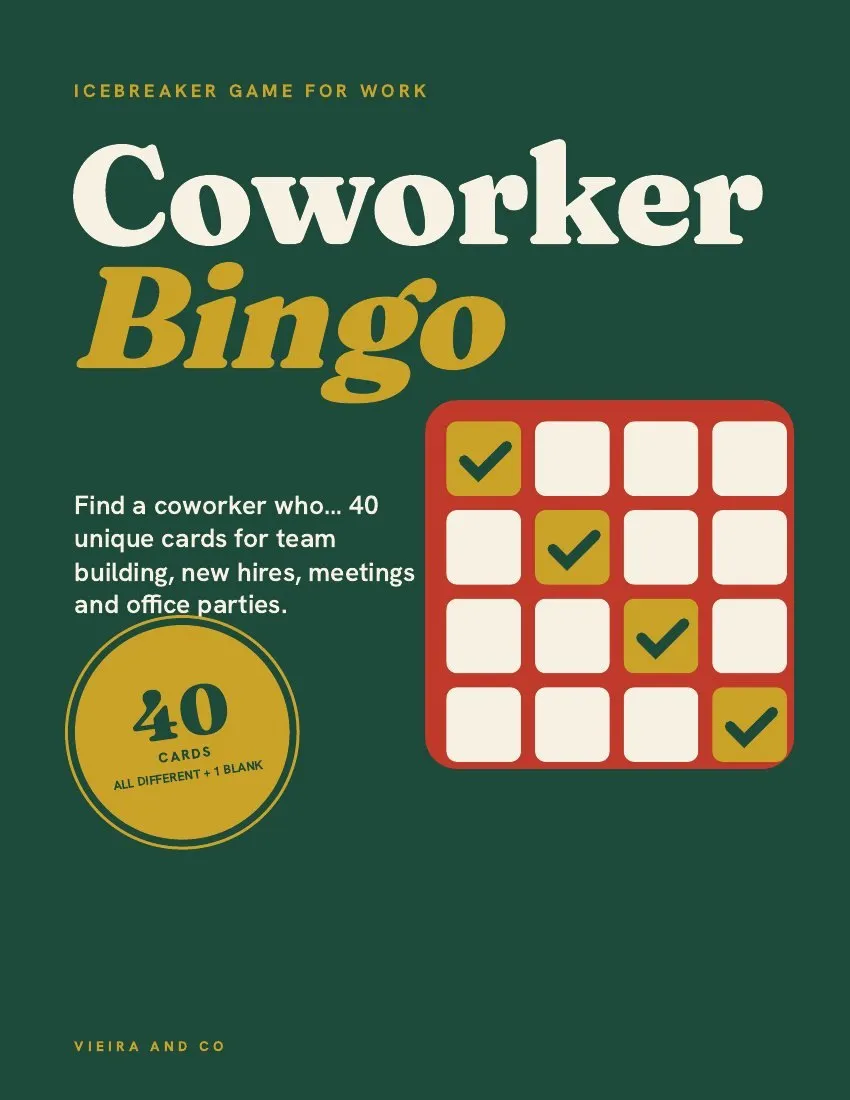
Coworker bingo
40 icebreaker bingo cards for team building and new hires.